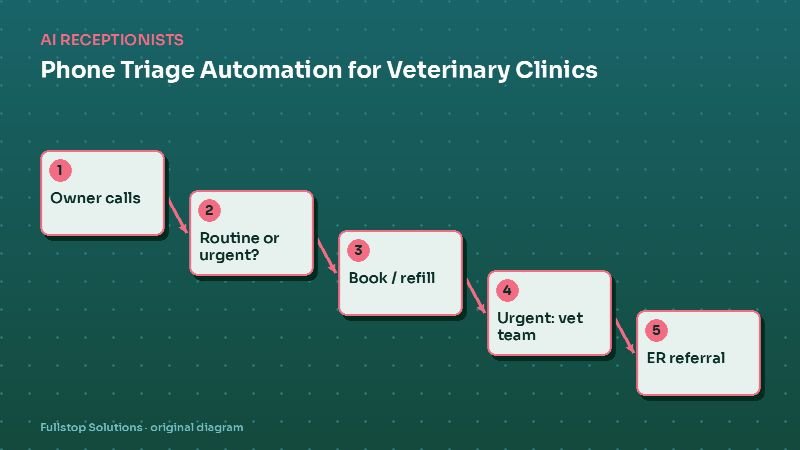
Short answer: veterinary clinics can automate the routine side of their phones (wellness and vaccine booking, refill requests, reminders, boarding and grooming questions) and use veterinarian-written triage rules to route urgent calls to the team immediately or to an emergency hospital when closed. The automation never diagnoses; it gets the right call to the right person faster.
Why vet phones are hard
A veterinary front desk handles two very different kinds of calls, often back to back:
- Routine: "Is Max due for his rabies shot?", "Can I refill Bella's thyroid medication?", "What do I need for boarding?", "Can I move my appointment?"
- Frightening: "My dog ate chocolate", "My cat is straining and nothing is coming out", "He was hit by a car."
When the desk is busy checking in patients and taking payments, both kinds of calls wait. Routine callers get frustrated. Worried owners get scared. Automation can take most routine calls and make sure the frightening ones jump the queue.
The triage foundation
Before automating anything, your veterinarians write the triage rules. A simple three-level structure:
- Immediate: situations your vets define as needing to be seen right away (for example, difficulty breathing, collapse, major trauma, suspected toxin ingestion, a male cat straining to urinate). During hours: transfer immediately to a technician or veterinarian. After hours: give the emergency hospital's details and offer to text the address.
- Same day or next day: concerning but stable situations, routed to the next available sick appointment or a technician callback.
- Routine: wellness, vaccines, refills, records.
The assistant asks a few structured questions to place the call. When in doubt, it escalates. The AVMA's pet first aid resources are a good public reference to point owners to, but your team's protocol comes first.
What to automate
Booking
Wellness exams, vaccines, dental cleanings (with pre-anesthetic instructions), and rechecks can be booked into real availability with appointment-type rules: duration, which doctors, exam rooms, and fasting instructions sent automatically.
Refill requests
The assistant collects pet name, medication, dose and preferred pharmacy or pickup, then creates a refill request for the veterinarian to approve. The owner gets a text when it is approved and ready. No phone tag.
Reminders and recalls
Vaccine and wellness reminders, triggered from your practice software's due dates, with a booking link. Pre-surgery reminders with fasting instructions the night before. Post-surgery check-ins the next day, with replies routed to a technician.
Boarding and grooming
Requirements (vaccination records, feeding instructions), availability and drop-off times are perfect for automation. Missing vaccine records can trigger an upload request before the stay.
Records requests
Requests from owners or other clinics can be logged and routed, with release requirements explained.
Emergency and 24-hour hospitals
For emergency vet hospitals, the phone is often the first step of triage. Automation can:
- answer instantly, even at peak times,
- collect species, age, weight, and what happened,
- tell owners what to bring and how to transport safely, per your protocol,
- give the team a heads-up summary before the patient arrives,
- explain the deposit or estimate process so there are no surprises at the desk.
Real-time wait information, if you share it, can help owners decide, but avoid anything that sounds like advice not to come in.
Tone matters
Owners calling about a sick pet are often scared. Scripts should be calm, short and kind. "I'm sorry Max isn't feeling well. Let me get you to the right person quickly." Avoid cheerful upsell language anywhere near a sick-pet call.
Integrations
Practice management systems differ widely. During scoping we confirm:
- whether appointments can be created directly,
- whether due dates for reminders can be read,
- whether refill requests can be created as tasks,
- how call notes attach to the patient record.
Measuring success
Before and after:
- calls answered and abandoned,
- time to transfer for immediate-level calls,
- refill requests handled without phone tag,
- reminder-driven bookings,
- staff perception of phone stress.
Mistakes to avoid
Triage written by non-clinicians. Your vets must own the rules.
Burying the emergency path. The first question should identify urgent calls.
Long menus. A worried owner should not have to listen to six options. Use natural language with a short fallback menu.
Questions to settle with your team
Which symptoms or situations count as "immediate" for your hospital, and who receives those transfers? Which emergency hospital do you refer to after hours, and will they accept a heads-up summary? Which appointment types can be booked automatically, and which need a technician to review first? Who approves refill requests, and how quickly do you commit to answering them? Should the assistant mention estimates or deposits, and in what words? Agreeing on these answers as a team, and writing them down, is the most important part of the project.
An evening of calls at a small animal clinic
At 6:40 p.m., after closing, a caller says their dog ate part of a chocolate bar. The phone assistant does not assess the risk. It follows the clinic's rule for possible toxin ingestion: give the emergency hospital's address and number, mention the pet poison helpline the clinic lists, and send the same details by text. The call is logged for the morning team.
At 7:15, a caller asks to book a vaccine appointment. The assistant books a slot on the online schedule and sends the clinic's pre-visit instructions. At 8:05, someone asks whether the clinic sees rabbits; the answer comes from the clinic's FAQ. At 9:30, a caller describes a cat straining in the litter box. That matches a symptom on the clinic's urgent list, so the assistant gives the emergency hospital details and offers a callback first thing in the morning if the owner decides to wait.
In the morning, the front desk reviews the overnight summary: two bookings, one FAQ, two urgent referrals with the owners' numbers. A technician calls both urgent callers to follow up.
Writing the urgent list with your veterinarians
The symptom list belongs to your veterinarians, not to the assistant or its vendor. Write it together, use plain words owners would say, and review it every few months. When in doubt, the rule should send the owner to emergency care or a veterinarian, never reassure.
Where to start
Start with refill requests and routine booking, which free up the most desk time with the least risk. Add after-hours triage with emergency referral next. Our veterinary clinic automation page lists the full set of workflows, and the AI receptionist guide explains rollout.