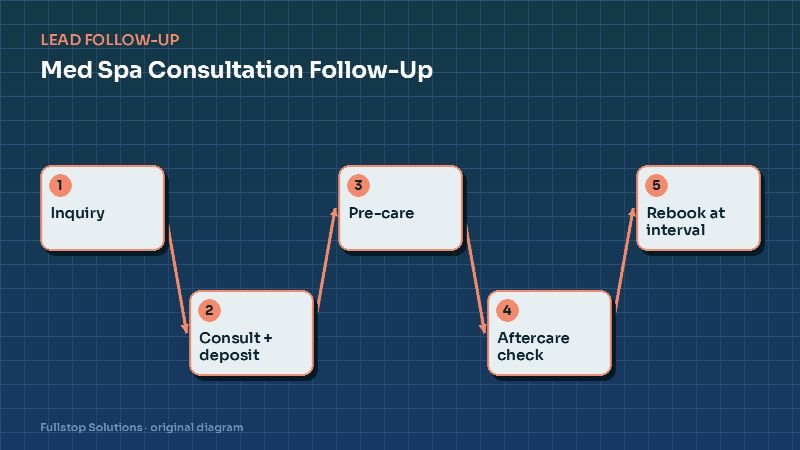
Short answer: med spa revenue depends on two moments: turning an inquiry into a consultation, and turning a first treatment into a repeat client. Automation handles both. It replies instantly to every inquiry, books consultations with a deposit and clear policy, sends preparation and aftercare instructions, checks in after treatment, and invites clients back at the interval your providers recommend. Clinical questions stay with licensed providers.
Why med spa leads hesitate
A med spa inquiry is rarely an impulse purchase. People research, compare providers, read reviews, ask friends and think about cost. They often message several spas at once, frequently at night, and they want reassurance more than a sales pitch.
That creates two common leaks:
- Slow or generic replies. A late-night Instagram DM or web form gets answered the next afternoon with "please call us to book".
- One-and-done clients. A client has a great first treatment, but nobody reminds them when it would make sense to come back, so they drift to whoever messages them first.
The inquiry-to-consult flow
Instant, warm reply
Every channel (web form, missed call, social DM through your inbox tool, chat) gets an immediate response that names the spa, acknowledges the specific service they asked about and offers the next step:
"Hi Jess, thanks for reaching out to Luma Aesthetics about lip filler. Our consultations are 30 minutes with one of our nurse injectors. Would you like to see available times? [link]"
Booking with a deposit
The booking link shows real consultation availability by provider and location. If you take a consultation deposit, the system collects it at booking, shows the cancellation policy in plain language and stores agreement to it.
Pre-consult preparation
A confirmation and a reminder two days before include practical preparation: arrive a few minutes early, bring a list of current medications, complete the intake form through your secure link. Medical history should be collected through your practice system's secure forms, not through text messages.
After the first treatment
Aftercare instructions
Immediately after a treatment is logged, the client receives the aftercare instructions your providers wrote for that service, plus who to contact with concerns. Consistent written aftercare is good practice and reduces worried phone calls.
The check-in
A day or two later, a short check-in: "How are you feeling after your treatment? If anything concerns you, reply here and our team will get back to you, or call us at ..." Replies route to clinical staff. Any reply mentioning a symptom should alert a provider promptly, during the hours you staff it, with clear instructions for after-hours concerns.
Treatment-interval rebooking
Many services are repeated at typical intervals. Your clinical team sets the interval for each service in the system; the automation schedules a friendly reminder and booking link at that time. This is not a discount blast. It is a reminder that it is time, which clients generally appreciate.
Memberships and packages
If you sell memberships or packages, automation can track remaining sessions, remind members of unused credits before they expire, and alert staff when a member has not visited in a while. Keep messages helpful and specific to the member's own plan.
Privacy and compliance
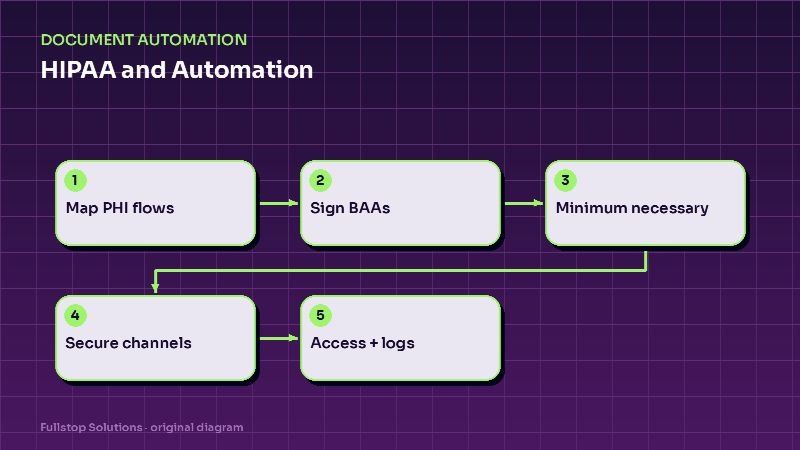
Med spas handle sensitive information: health history, photos and treatment records. Whether HIPAA applies formally depends on your practice's status, but treating this information carefully is non-negotiable either way:
- Keep health details out of texts and email. Use secure portal links for forms and photos.
- Limit what each tool sees. A reminder tool needs a name, a phone number and an appointment time, not treatment notes.
- Get the right agreements. If you are a covered entity, vendors that handle protected health information on your behalf are business associates, and HHS describes what a business associate contract must cover.
- Be careful with before-and-after photos. Use them in marketing only with written consent.
- Texting consent. Reminders about appointments the client booked are different from promotional texts, which need written consent under the rules described by the FCC.
Our HIPAA and automation article goes deeper.
Common mistakes
Over-discounting. Constant promo texts train clients to wait for deals. Lead with reminders and education.
Bots giving clinical answers. "Is filler safe for me?" belongs with a provider.
Rigid deposit rules with no human override. Give front-desk staff the ability to waive or adjust in reasonable cases.
No link between booking and records. If your booking tool and EMR do not talk, someone re-keys every appointment.
A worked example with your numbers
Take the number of first-time clients you treat in a typical month (N), the share who currently come back for a second treatment within the recommended interval (R), and your average treatment value (V). If timely, personal reminders brought back an extra share X of the clients who currently drift, the monthly gain is about N × (1 − R) × X × V. Most spas can pull N and R from their booking software in a few minutes. It is worth doing before you build anything, because it shows whether inquiry handling or rebooking is the bigger opportunity for you.
A consultation inquiry, start to finish
A prospective client asks about a treatment through the med spa's website on Wednesday evening. They receive an immediate reply thanking them, linking the provider's treatment page and offering consultation times. The inquiry is created in the CRM with the treatment of interest and their consent choices.
They book a consultation for the next week. Intake forms, including medical history, arrive by secure link to complete beforehand. A reminder goes out the day before with parking details.
After the consultation, the provider records the recommended plan. The client receives a follow-up with the plan summary and pricing the provider shared, plus a link to book. They don't book right away. Over the next two weeks, they receive two helpful messages: aftercare expectations and answers to common questions about the treatment, reviewed by the medical director. Then a staff member calls.
They book. Pre-treatment instructions go out ahead of the appointment, and aftercare instructions and a check-in follow afterwards.
Measuring with your own numbers
Compare consultation-to-treatment rates for clients who received the follow-up sequence and those who did not, using your booking records.
Where to start
Most med spas get the quickest benefit from instant inquiry replies plus consultation booking with deposits, then treatment-interval rebooking. See our med spa automation page and Botox and injectables page for the full workflow list, and the lead follow-up pillar guide for the framework.