Short answer: in fitness, the first weeks decide whether someone becomes a long-term member. Automation follows up on every trial, prepares people for their first visit, celebrates early milestones, alerts coaches when attendance drops, recovers failed payments and runs respectful win-back campaigns. Coaches spend their time on people instead of spreadsheets.
Why onboarding is the whole game
People join gyms and studios with good intentions and quit when the habit does not form. The risk is highest early: a member who has not built a routine in the first month is much more likely to cancel. Most studios know this but do not have time to personally check on every new member.
Automation does not replace the coach's welcome. It makes sure nobody slips through.
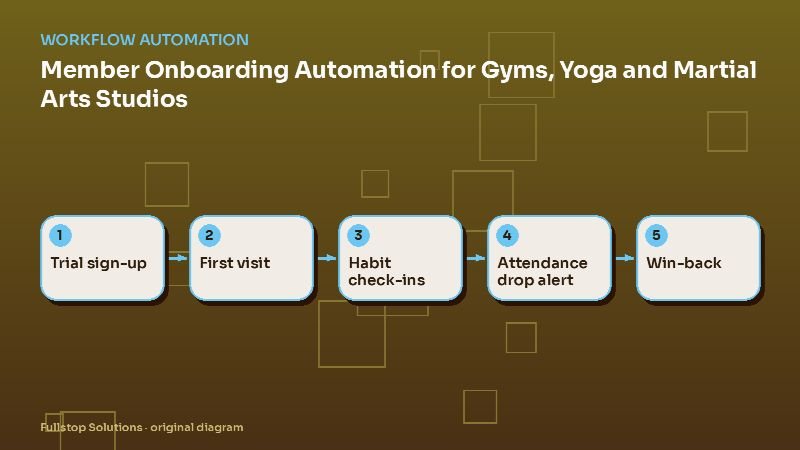
The member journey, automated
1. Trial or intro offer sign-up
Immediately after someone signs up for a trial or intro pack:
- a welcome message from a named coach,
- what to expect: what to wear, when to arrive, parking, what the first class is like,
- a booking link for the first class if they did not book one.
2. Before the first visit
A reminder the day before and a short note on the day: "See you at 6 pm! Arrive ten minutes early so Sam can show you around." First visits are nerve-wracking for many people; reassurance helps.
3. After the first visit
A check-in that same evening or the next morning, ideally from the coach who led the class: "Great to meet you today. How are you feeling? Want me to save you a spot Thursday?" Replies go to the coach.
4. Building the habit
During the first few weeks, messages tied to actual attendance:
- after the third visit: a short congratulations,
- if no booking for the next week: a gentle nudge with the schedule,
- at the end of the trial: a clear membership offer with options.
5. Attendance-drop alerts
For existing members, the system watches attendance against each member's usual pattern. When someone who came three times a week has not checked in for ten days, a coach gets an alert, or the member gets a personal check-in: "We've missed you at early morning class. Everything okay?" This kind of timely, personal outreach is one of the most valuable things a studio can do.
6. Failed payment recovery
Expiring cards and failed charges cause involuntary churn. Automation can:
- remind members before their card expires,
- send a friendly update-your-card link when a charge fails,
- retry on a schedule,
- alert the front desk before access is paused.
7. Win-back
Members who cancel can receive a short exit survey, then, a couple of months later, a no-pressure invitation to come back. Keep it respectful and stop after one or two messages.
Studio-specific notes
Yoga studios: class packs and memberships, with many drop-ins. Automate pack-expiry reminders and intro-series follow-ups. See yoga studio automation.
Pilates studios: limited reformer spots make waitlists and late-cancel policies important. Waitlist auto-fill and reminders matter most. See Pilates studio automation.
Martial arts schools: many students are children, so communication goes to parents. Automations track attendance toward belt testing, send testing reminders and celebrate promotions. Be careful with children's information and photos: the FTC's COPPA guidance explains rules for collecting personal information online from children under 13, and photos of minors should only be shared with parental consent. See martial arts school automation.
Tools
Studios use platforms such as Mindbody, Glofox, Zen Planner, Wodify, Pike13 and others. Most include basic automations; cross-system flows (attendance-drop alerts to a coach's phone, CRM sync, personalized milestone messages) often need an integration platform or a small custom service.
Tone and frequency
Fitness messaging easily becomes noise. A few rules:
- tie messages to what the member actually did (or did not do),
- sign them from a real coach where possible, and let replies reach that coach,
- keep marketing (promotions, challenges) separate, with its own consent,
- never shame people for missing classes.
Measuring the impact
Track by cohort (members who joined in the same month):
- trial-to-member conversion,
- members still active after 90 days,
- failed-payment recovery rate,
- win-back rate.
Compare cohorts before and after launch to see the real effect.
Mistakes to avoid
Generic newsletters instead of personal check-ins. The attendance-triggered message is what moves the needle.
No coach involvement. Automated messages work best when they open a conversation with a real person.
Aggressive cancellation saves. Making cancellation hard creates resentment and complaints. Make it easy, ask why, and invite people back later.
A worked example with your numbers
Look at the last three months of trials. Note how many started (T), how many became members (M), and how many of those members were still active 90 days later (K). Now you have two rates: conversion (M ÷ T) and early retention (K ÷ M). Multiply your average monthly membership fee by the number of extra members you would keep if each rate improved a little, and you have a realistic picture of what better onboarding is worth. Recalculate the same rates for cohorts that join after the automation is live.
A new member's first month
A new member signs up online on a Sunday. They receive a welcome message with what to bring, how to check in, and a link to book a free orientation or first class. The membership terms and cancellation policy they agreed to are attached for reference. For members under 18, the parent or guardian receives the paperwork instead.
They book an orientation for Tuesday. Monday evening, a reminder includes parking details and the coach's name. After the orientation, a message asks what goal they have, with a few choices. Their answer tags their profile and shapes the next few messages: class suggestions for one goal, a personal training intro offer for another.
Week two, the system notices only one check-in. A short, friendly message suggests two classes that fit their schedule. Week three, a coach receives a task to send a personal note. At day 30, a check-in asks how it is going; a reply mentioning a problem goes to the front desk manager.
Measuring with your own check-in data
Compare check-ins in the first 30 days for members who later cancelled and those who stayed. If early attendance differs sharply, the first month is where onboarding automation pays off.
Where to start
Start with the trial follow-up sequence and attendance-drop alerts. Add failed-payment recovery next; it often pays for itself quickly. Our fitness studios and gyms automation page lists the full set of workflows, and the workflow automation guide explains the general approach.