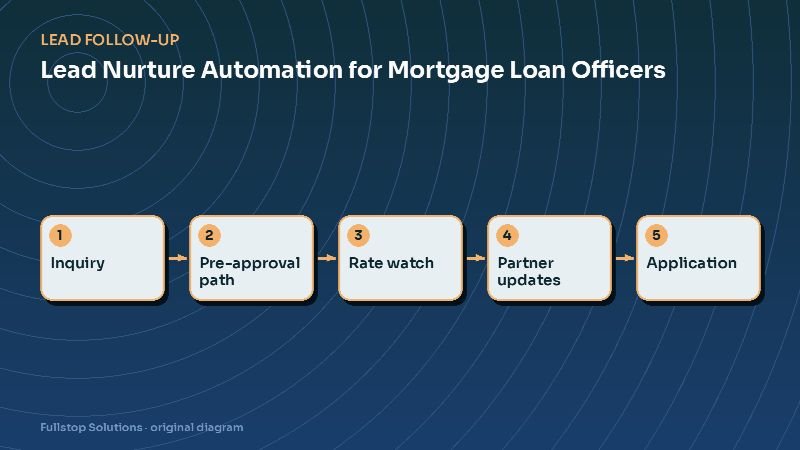
Short answer: most mortgage leads are not ready to apply today. Nurture automation keeps a loan officer in contact for months with messages that are triggered by something relevant (a missing document, a rate threshold the borrower asked about, a timeline they gave), hands warm leads back to a human, and keeps referral partners informed. Because mortgage data is sensitive, the automation also has to follow your information security program.
Why mortgage follow-up needs to be long
A renter thinking about buying "sometime next year", a homeowner watching rates before refinancing, a self-employed borrower who needs two years of returns: these are all real leads, but none of them will apply this week. Loan officers know this, but with a full pipeline of active files, the long-timeline leads are the first to be forgotten.
The answer is not more calls. It is a system that stays in touch with useful information and surfaces people at the moment they become ready.
The three nurture tracks
Track 1: Start the pre-approval
For new inquiries, the first week matters. A short sequence:
- Immediately: thanks, your name and NMLS details as required, and a link to start a pre-approval or book a call.
- Day 1 or 2: a plain-language explainer of what pre-approval needs (income, assets, credit authorization).
- Day 4 or 5: a personal-feeling check-in that a loan officer can reply to directly.
If the borrower starts an application, the sequence stops and the processing workflow takes over.
Track 2: Document chase
Incomplete applications stall on documents. Automated, specific reminders ("We still need your two most recent pay stubs") with a secure upload link work far better than a generic "please send your documents". Each reminder stops when the document arrives. This is where document processing automation helps: incoming files can be classified and checked for the right pages before a processor looks at them.
Track 3: Long-term rate and timeline watch
For people who are months away, a low-frequency nurture:
- a check-in timed to their stated move window,
- an alert when rates cross a threshold they chose (only if they opted in),
- an annual mortgage review for past clients.
Low frequency and high relevance keep unsubscribes down and replies up.
Partner updates
Referring real estate agents want to know where their buyers stand. With the borrower's permission, the system can send the agent milestone updates when the loan status changes in your loan origination system: pre-approval issued, appraisal ordered, conditions cleared, clear to close. That saves the "any update?" phone calls and makes you the easy lender to work with.
Data security and compliance
Mortgage data is some of the most sensitive data a small business handles. The FTC's Safeguards Rule guide lists mortgage brokers and lenders among its examples of covered financial institutions and requires a written information security program with access controls, encryption, multi-factor authentication and oversight of service providers. In practice, for automation that means:
- Never send sensitive data in plain text messages or email. Use secure portal links.
- Limit what the automation tool can see. It needs names, contact details and status, not full financial files.
- Vet every tool as a service provider. Your contracts should spell out security expectations, as the rule describes.
- Log access. Know who and what touched customer information.
Advertising and disclosure rules also apply to mortgage marketing. Keep automated content general, avoid specific rate claims, and have your compliance reviewer approve templates. Commercial email must also follow CAN-SPAM: accurate sender, honest subject lines, a postal address and a working unsubscribe.
The hand-back to a human
Nurture should create conversations, not replace them. Build triggers that alert the loan officer immediately when:
- a lead replies to any message,
- a lead clicks the application link,
- a lead's stated timeline arrives,
- a past client opens a refinance-related message more than once.
The alert includes the history, so the loan officer can pick up naturally.
Mistakes to avoid
Treating every lead the same. A first-time buyer and a refinance shopper need different content.
Generic newsletters. Monthly "market update" blasts are easy to ignore. Triggered, personal messages perform better and respect people's time.
Plain-text document requests that invite people to email their tax returns. Always send a secure upload link instead.
No stop rules. A borrower who applied should not keep receiving "are you ready to apply?" messages.
A borrower's path through the nurture system
A prospect fills in a pre-approval inquiry on a Saturday evening. They receive an immediate reply from the loan officer's number thanking them, explaining the next steps and offering a short call booking. The lead is created in the CRM with the source and the consent they gave on the form.
They book a Monday call. Before the call, they receive a secure link to upload income documents. After the call, the loan officer marks them as "pre-approval in progress"; the document checklist reminders begin for anything still missing.
The prospect is not ready to buy for six months. They move to a long-term nurture track: a monthly educational email about the buying process, a check-in text from the loan officer every couple of months, and a reminder to refresh their documents when they are ready to make offers. Every message has an unsubscribe or stop option, and opt-outs update the CRM.
When the prospect texts that they found a house, the loan officer gets an alert and calls within the hour. Their real estate agent, if they have one, receives updates at the milestones you agreed to share.
Estimating value with your own pipeline
Count leads from the past year that went quiet without being disqualified. Multiply by your historical rate of quiet leads that later closed, if you track it, and your average revenue per funded loan. Even a conservative estimate shows what a consistent nurture system is worth.
Measuring the impact
Track, by lead source and track: time to first contact, pre-approvals started, applications submitted, and time from inquiry to application. Compare cohorts before and after the nurture launch. Your own pipeline data is the only fair test.
Where to start
Most loan officers get the quickest benefit from the document-chase track, because it shortens files already in progress. The pre-approval start sequence comes next, then long-term nurture. Our loan officer page and mortgage broker page list the workflows we usually build, and the lead follow-up pillar guide covers the general framework.